
Artificial Savant Intelligence
The Growing Gap in AI Capabilities

In recent years, the field of artificial intelligence has seen remarkable advancements, particularly in the domain of large language models (LLMs). These models have demonstrated extraordinary capabilities in tasks ranging from natural language processing to code generation. However, as we continue to push the boundaries of AI, a curious phenomenon is emerging: the widening gap between AI's performance in STEM fields and its abilities in more nuanced, creative areas like the humanities. This growing disparity has led to the concept of "Artificial Savant Intelligence" (ASI), drawing parallels between these AI systems and human savants who possess extraordinary skills in specific areas while struggling in others.
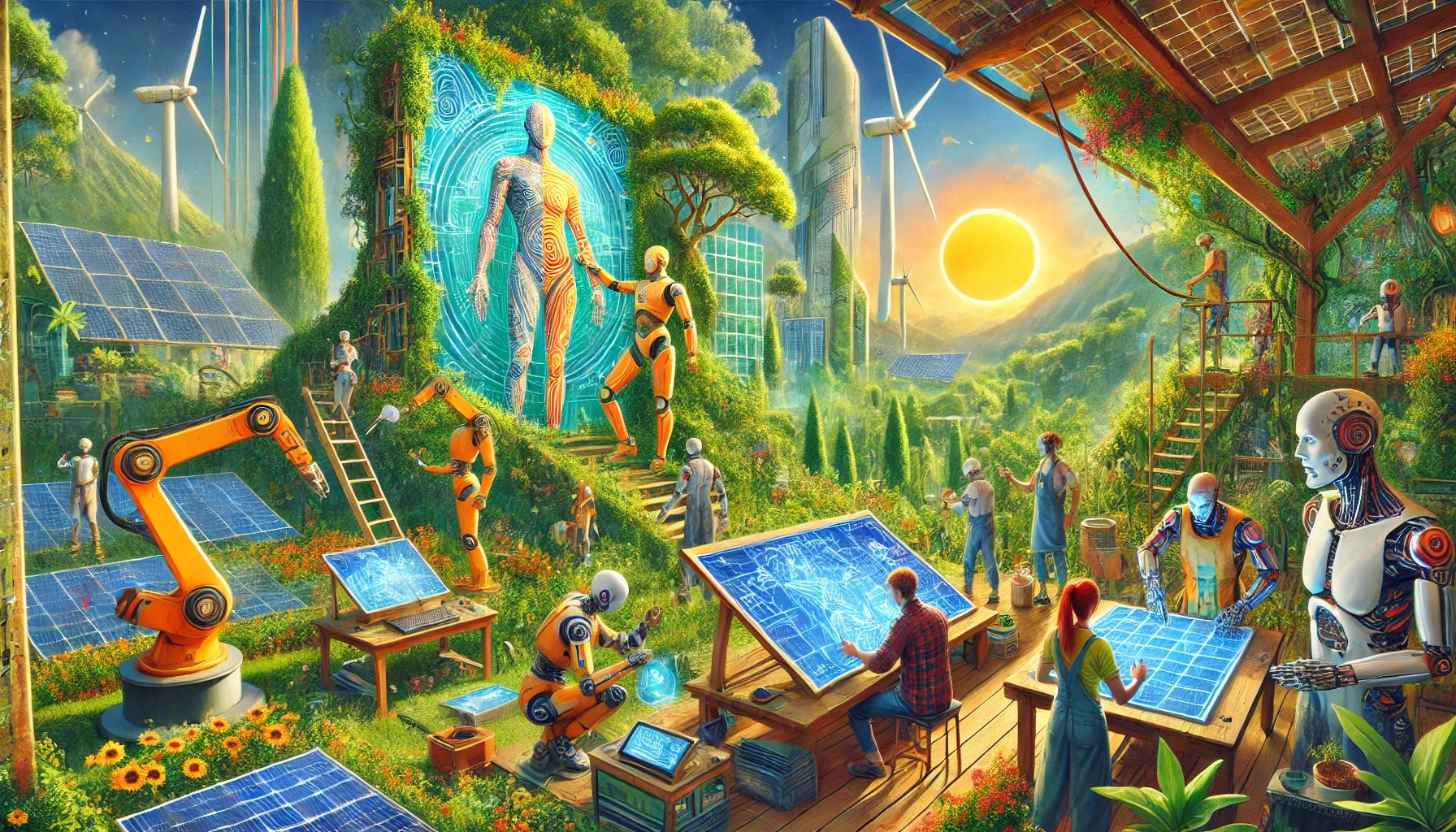
The Current State of AI: A Savant-like Profile
Today's LLMs exhibit a profile reminiscent of savant syndrome in humans:
Exceptional STEM skills: They excel at tasks requiring logical reasoning like writing code, pattern recognition, and vast knowledge retrieval.
Proficiency in multiple languages: Both human and programming languages are handled with remarkable accuracy.
Impressive information retrieval and synthesis: They can quickly process and combine information from their vast training data.
Struggle with nuanced communication: Despite their language skills, they often produce stilted or overly formal prose.
Limited understanding of humor and context: They struggle with generating high-quality, contextually appropriate humor. Compare the previous sentence to “they just ain’t funny.”
Hyperliteral interpretation: They tend to interpret information and instructions in a highly literal manner, missing subtle cues or implied meanings.
The Widening Gap: Why STEM Skills Will Outpace Humanities
As we continue to develop AI technologies, several factors are likely to amplify this savant-like profile:
Synthetic data generation: The ability to create vast amounts of synthetic data will disproportionately benefit STEM-related tasks, where rules and patterns are more clearly defined.
Advanced search techniques: Improvements in areas like Monte Carlo Tree Search (MCTS) — see the rumored “Q*” — will enhance problem-solving capabilities in structured domains but may not significantly impact understanding of nuanced human expression.
Enhanced reasoning capabilities: While logical reasoning will improve, the kind of intuitive reasoning required for tasks like humor creation may not see comparable gains.
Token prediction vs. creative content: Increasing the accuracy of next-token prediction does not necessarily translate to the ability to generate surprising, creative, or humorous content.
Multimodal integration: As AI models incorporate multiple modalities (text, image, sound), they may become even more adept at processing and analyzing data but not necessarily at understanding the subtle interplay of these elements in human culture.
Implications of Artificial Savant Intelligence
The emergence of ASI has significant implications for the future of AI development and application:
Specialized AI systems: We may see a trend towards highly specialized AI systems designed for specific STEM tasks, like AI engineers or AI doctors, rather than generalist AIs.
Human-AI collaboration: The strengths of ASI in STEM fields could lead to powerful human-AI collaborative efforts in scientific research and technological development.
Continued human dominance in creative fields: Humans are likely to maintain the role of creative director, using AI tools but not letting the AI have free reign as tastemaker, in areas requiring emotional intelligence, creativity, and nuanced understanding of culture.
Ethical considerations: As AI systems become increasingly capable in some areas while remaining limited in others, we must carefully consider their appropriate use and potential societal impacts.
Education and skill development: Understanding the strengths and limitations of ASI could influence how we approach education and skill development in both humans and AI systems.
Conclusion
As we stand on the cusp of the next generation of AI technologies, it's crucial to recognize and understand the concept of Artificial Savant Intelligence. While we can expect to see incredible advancements in AI's capabilities in STEM-related fields, we should also temper our expectations regarding AI's ability to match human-level performance in areas requiring deep cultural understanding, emotional intelligence, and creativity.
This growing disparity challenges us to think critically about how we develop and deploy AI technologies. It also highlights the enduring value of human skills in areas where AI struggles. As we move forward, the key to harnessing the full potential of AI may lie not in trying to make it more human-like in all aspects, but in understanding and leveraging its savant-like nature while preserving and valuing the uniquely human qualities that complement it.
That AI is more suited to doing STEM tasks than other “soft” cognitive skills is a blessing. It means that, despite the hype for Artificial General Intelligence (AGI) there will be a role for humans in the future after all.